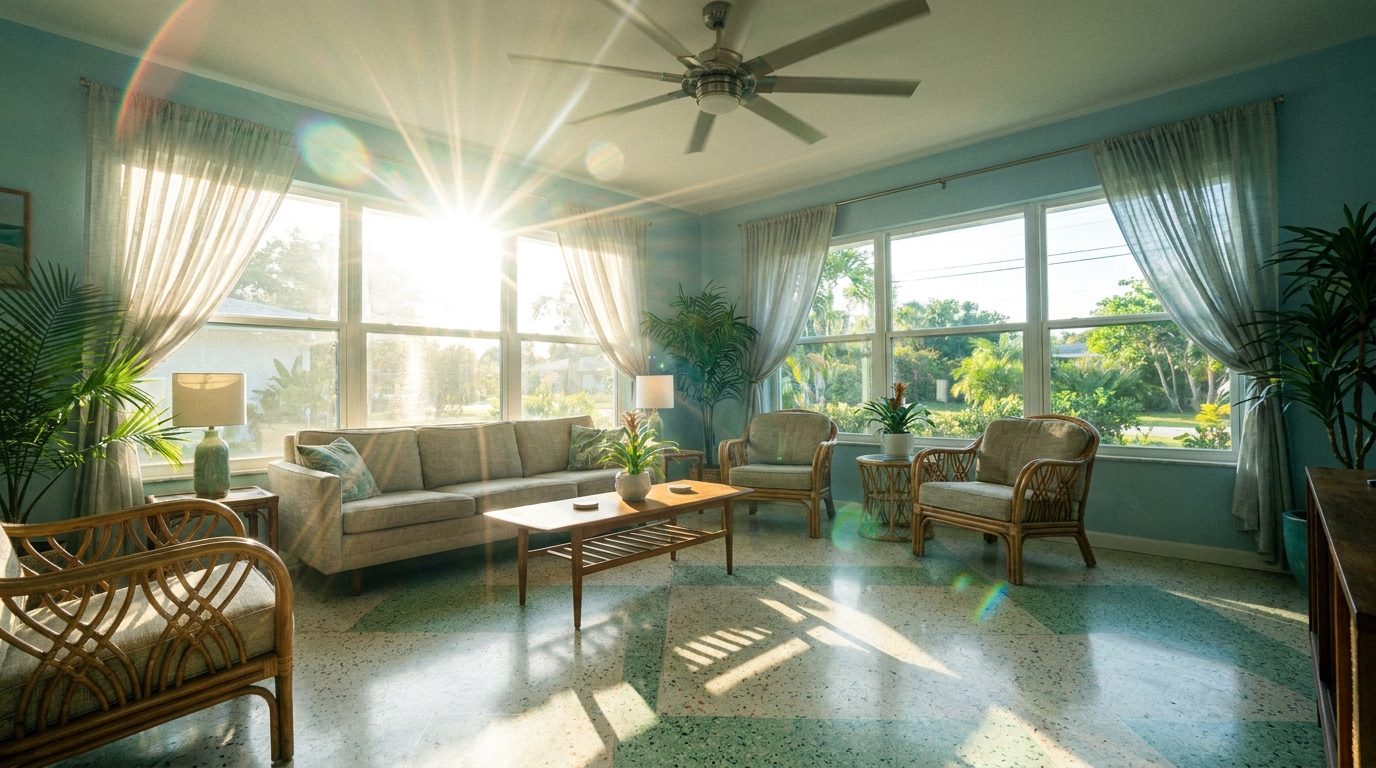
Two panes and one coating you cannot see.
A double pane unit, sometimes called an insulated unit, is two sheets of glass separated by a sealed cavity, often filled with an inert gas and held apart by a spacer at the edge. That cavity slows conduction, the plain transfer of heat through solid material. It is the reason the interior surface of a good window sits closer to room temperature on a hot afternoon instead of quietly radiating warmth at you from across the room.
The bigger lever in Florida is the coating. Low E is short for low emissivity, a microscopically thin metallic layer applied to a glass surface inside the sealed unit. It is tuned to pass visible daylight while reflecting a large share of the infrared energy that carries heat. You keep the light and the view, and a meaningful portion of the heat that used to ride in with them gets turned back outside. Coatings are formulated differently for cooling climates than for heating climates, which is one more reason to buy from a company that sells in Florida every week.
What you will not find here is a percentage. The performance of a specific window is measured, certified, and printed on that window, and it moves with the manufacturer, the glass package, and which coating was quoted. A number invented for a web page is worth nothing next to the sticker on the glass.